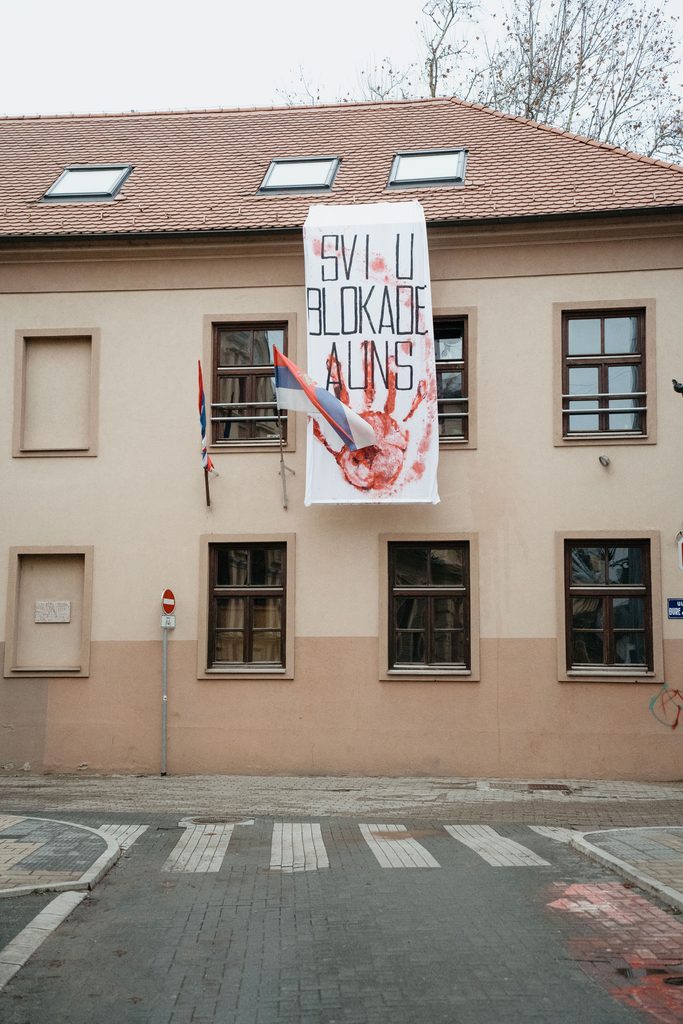
October the 28th, 2026 – Hungary toppled Viktor Orbán after 18 years in power, and now Serbia has binned Aleksandar Vučić, many are now asking the question of whether or not a big change for Croatia is next. After almost 14 years of political dominance, Aleksandar Vučić just suffered a staggering electoral defeat in Serbia. Only a few months earlier, Viktor Orbán was toppled from power in Hungary after 16 years. Can Croatia, where the HDZ has been in power continuously since 2016, be next? Vedran Salvia reports for Index that although it is abundantly clear that Plenković’s government has not built an authoritarian system of the kind established by Orbán and Vučić, all three countries share long-term dominance by a single political option that has over time developed a strong network of influence in state institutions and the public sector. Croatia is thus marked by strong clientelism, party-based appointments, corruption and seriously eroded institutions. During the ten years of Plenković’s rule, the HDZ has not attempted to confront this way of running the state, but has further strengthened it. A party membership card and connections still all too often count for more than knowledge and ability, and the consequences of such a system are felt in almost all parts of society. both hungary and serbia seek to forge new paths Interestingly, neither Orbán nor Vučić was defeated by the traditional opposition parties. In Hungary this was achieved by Péter Magyar, a former man of Orbán’s system, who with his party Tisza gathered a broad circle of voters dissatisfied with long-term rule. Among them were also people who had previously supported Orbán’s Fidesz. In Serbia, the situation was somewhat different. Vučić was defeated by the Student List, which emerged from the protests after the tragedy in Novi Sad, where on the 1st of November 2024, a railway station canopy collapsed and killed 16 people. The accident opened questions of corruption and institutional responsibility, and the protests grew into a mass movement against Vučić’s government. 75% of people think croatia is heading in the wrong direction In Croatia, there is no shortage of dissatisfaction with the government. According to the latest CRO Demoskop, conducted from 6 to 8 October, more than 75 percent of respondents believe that the country is going in the wrong direction. Only a little over 17 percent think that Croatia is going in the right direction. At the same time, HDZ, although recording a drop in popularity, remains the strongest individual party with 25 percent support. The SDP is at a little under 20 percent, Možemo at almost 14 percent, and Most has approached 10 percent. Interestingly, both HDZ and SDP are declining at the same time, while Možemo is growing. In other words, dissatisfaction with those in power is not automatically translating into growth for the largest opposition party, and this is one of the biggest differences between Croatia and the two neighbouring countries. In Hungary, Tisza managed to become the main political alternative to Orbán. In Serbia, the students almost completely pushed aside the traditional opposition and turned into a movement that can win power on its own. Croatia does not have such a political force. It has several opposition parties, some of which govern important cities and have significant voter support, but none has so far managed to gather such a broad circle of dissatisfied citizens. At the same time, the Croatian opposition doesn’t have an individual who, like Magyar, could attract a significant part of the ruling party’s voters. Magyar’s success was not based solely on criticism of Orbán. As a man who came from within the Fidesz system, he was able to convince even some conservative voters that a change of government does not necessarily mean abandoning their political beliefs. electoral maths still favours hdz… Croatian electoral mathematics are also highly important. Croatia is divided into ten territorial electoral units, in each of which 14 seats are distributed separately. Therefore it is not only the total number of votes that matters, but also their distribution. HDZ greatly benefits from a strong party organisation and stable support in numerous parts of the country. The boundaries of the electoral units were redrawn in 2023 after the Constitutional Court repealed the previous law. The new model was adopted by an HDZ majority and drew criticism for the illogical linking of certain areas. Political scientist Goran Čular then warned for Gong: “The prime minister said that the arrangement of electoral units is a technical issue, but HDZ is doing everything to ensure that it is not just a technical issue.” Nevertheless, HDZ’s victory back in 2024 cannot be attributed solely to the electoral system. Its coalition won 61 seats, fully 19 more than the SDP coalition, and it formed the government again with the help of the Homeland Movement. The electoral system can be an additional advantage for it, but for a change of government the opposition must first and foremost win significantly broader voter support. the clear differences between hungary, serbia and croatia Political scientist Tihomir Cipek, a professor at the Faculty of Political Science in Zagreb, spoke about why long-term governments fell in Hungary and Serbia, while in Croatia the HDZ still does not have an equally strong opponent. Cipek emphasises that the situations in Croatia, Hungary and Serbia are different. “In Hungary, a strong movement against Orbán was formed, which Péter Magyar gathered around his new party. Something similar happened in Serbia with the Student List. There we have a broad movement that brought together very different people, from liberals open to the world and cooperation with the European Union to Serbian nationalists who accused Vučić of betraying Kosovo and Metohija. Among them are both those who support sanctions against Russia and those who oppose them. Despite major political differences, what connected them all was opposition to Vučić,” Cipek said. why has no similar movement emerged in croatia? He explained that a similar movement against Plenković’s government has not emerged in Croatia because the political scene is already clearly divided among the existing parties. “In Croatia, the political system is structured along party lines. The type of people who found themselves together on the Student List in Serbia are already organised in different parties here. Here you have Možemo, which is for a more open society and, for example, cooperation with the EU, and on the other side Most, which has different views on migration and the openness of society. It’s very difficult to imagine them all uniting into one front against the government. In addition, the electoral system in Croatia must also be taken into account. Serbia is one electoral unit, while Croatia has ten, so it is important how the opposition will perform in each of them,” Cipek explained. He believes that the successes of the students and Magyar show that even long-term power is no guarantee of political survival. “That victory in Serbia shows that nothing is certain. You can be in power for a long time, build strong influence in state structures, but citizens can still remove you with their activity and energy. In Croatia it is much harder to create such a broad movement, but that does not mean that it is impossible to change the government,” Cipek concludes. is there even any potential for governmental change in croatia? “There is potential for a change of government because dissatisfaction is high. The key is how it will be politically articulated. If the SDP and Možemo organise well, change is possible,” Cipek says. He believes that the opposition parties have drawn lessons from earlier electoral defeats, when they ran separately or tried to form alliances that did not bring the expected result. “There is dissatisfaction, but it needs to be turned into a political programme. With clear messages, good organisation and voter mobilisation it is also possible for the Croatian opposition to win. Nothing is eternal,” Cipek concluded. The post Hungary Bins Orbán and Serbia Bins Vučić, Is Croatia Next? appeared first on Total Croatia .
Vedran Salvia reports for Index that although it is abundantly clear that Plenković’s government has not built an author





Comments