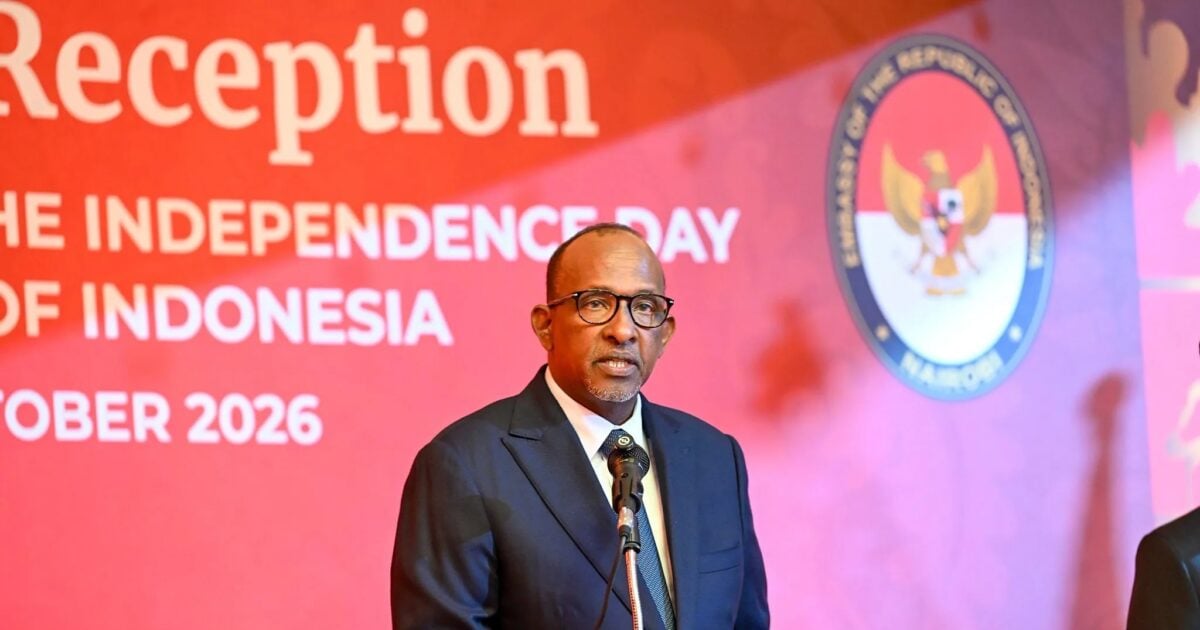
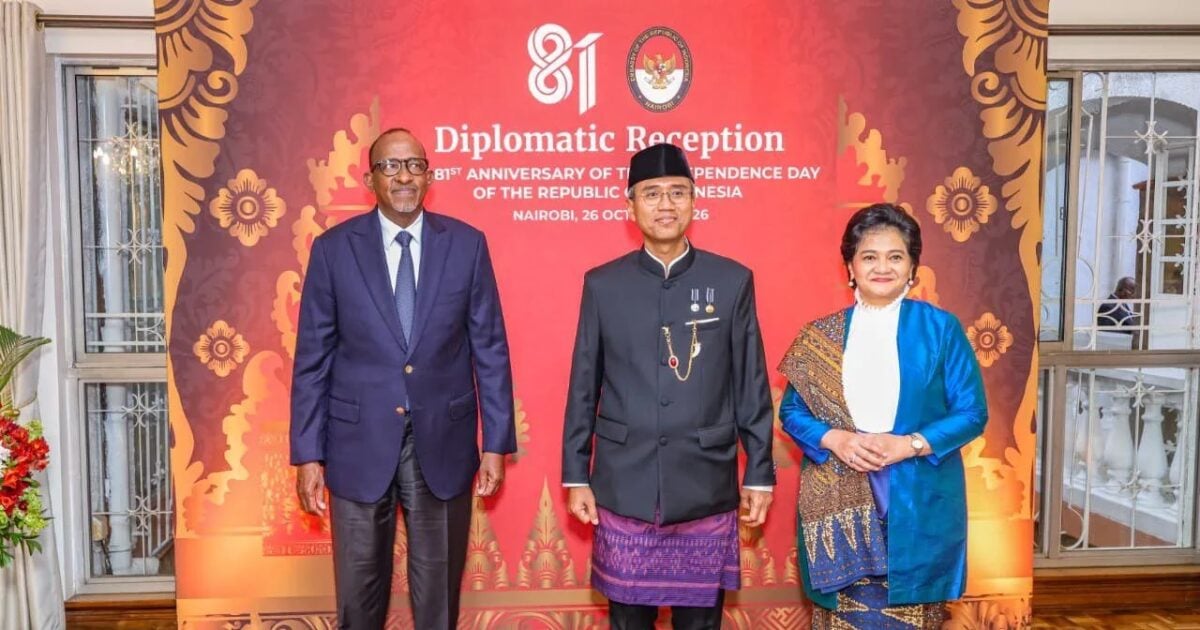
NAIROBI, Kenya, Oct 27— Kenya and Indonesia are deepening pharmaceutical cooperation to boost local vaccine production and reduce reliance on imported medicines, with the two countries identifying healthcare manufacturing as a key pillar of their bilateral partnership. Health Cabinet Secretary Aden Duale said cooperation between the Kenya BioVax Institute and Indonesia’s state-owned pharmaceutical company PT Bio Farma was accelerating efforts to build Kenya’s capacity for local vaccine manufacturing. Duale spoke on Monday during Indonesia’s 81st Independence Day celebrations at the Indonesian Ambassador’s residence in Nairobi, where he represented Prime Cabinet Secretary and Foreign Affairs Cabinet Secretary Musalia Mudavadi. He said the partnership, which involves the transfer of advanced biomanufacturing technology, would strengthen Kenya’s ability to process vaccines locally and improve long-term health security in the country and the wider East African region. “We highly value the active collaboration between the Kenya BioVax Institute and the Indonesian state-owned pharmaceutical pioneer PT Bio Farma through the ongoing transfer of advanced biomanufacturing technology,” Duale said. “Together we are fast-tracking Kenya’s capacity to initiate local fill-and-finish processing for life-saving vaccines.” The initiative comes as Kenya pursues greater health security by strengthening domestic pharmaceutical manufacturing and reducing dependence on imported medical products. Duale said cooperation between the two countries also extended to pharmaceutical regulation, following alignment between Kenya’s Pharmacy and Poisons Board and Indonesia’s National Agency of Drug and Food Control. He said the arrangement was intended to facilitate the availability of high-quality generic medicines by combining Indonesia’s pharmaceutical production expertise with Kenya’s manufacturing and export incentives. The partnership, he added, could help establish a competitive regional hub for essential medicines targeting both infectious and non-communicable diseases. “Access to safe, high-quality and affordable healthcare is a fundamental human right and a core pillar of Kenya’s domestic development agenda,” Duale said. “As we push towards health sovereignty and work to reduce our pharmaceutical import dependence, Indonesia has proven to be a deeply trusted partner.” Indonesian Ambassador to Kenya Witjaksono Adji said the two countries were seeking to expand their economic relationship beyond traditional diplomatic engagement, with opportunities in healthcare, manufacturing, energy, aviation and industrial development. Adji disclosed that bilateral trade reached approximately $690 million last year, highlighting the potential for further investment and commercial partnerships. “We see considerable potential for further cooperation in investments, industrial developments, downstream processing and value addition, as well as in aviation, energy, healthcare, manufacturing and the maritime sector,” he said. The ambassador invited Kenyan businesses to participate in the Indonesia Nairobi Expo, scheduled for November 26 and 27, which he said would provide a platform for companies from both countries to explore partnerships and develop business opportunities. Healthcare is already emerging as a priority sector. Six Indonesian companies participated in the World Health Expo held in Nairobi, showcasing pharmaceuticals, personal care products, herbal products and medical equipment. The participation, Adji said, reflected Indonesia’s interest in expanding commercial partnerships while contributing to stronger health systems. Duale said Kenya remained committed to broadening diplomatic and economic engagement with Indonesia across sectors of mutual interest, including renewable energy and capacity building.
NAIROBI, Kenya, Oct 27— Kenya and Indonesia are deepening pharmaceutical cooperation to boost local vaccine production a




Comments