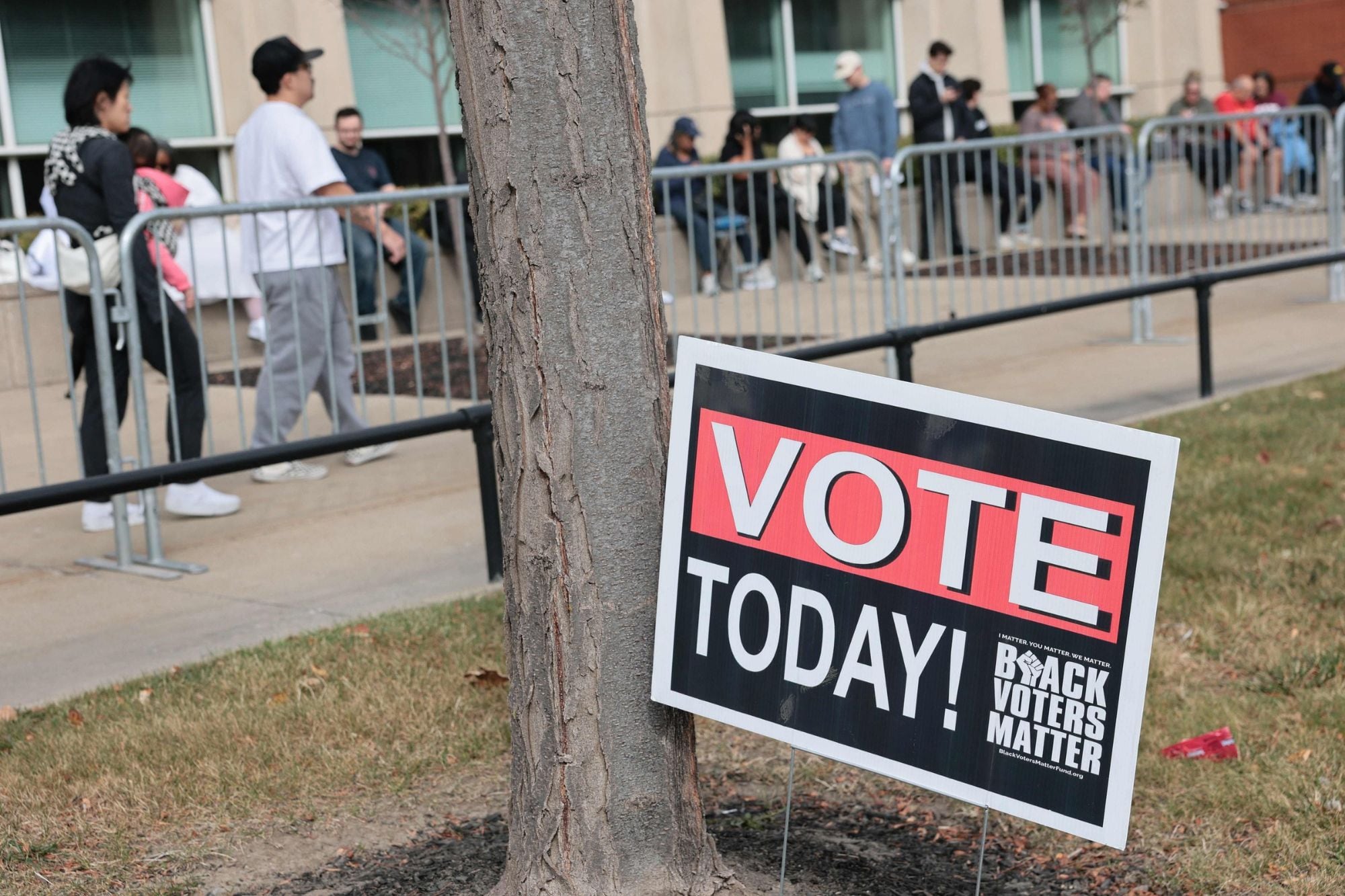
The cr us hing defeat suffered by US President Donald Trump’s Republican Party in the midterm elections is a reminder of j us t how politically toxic inflation is. Former President Joe Biden learned that lesson two years ago, and it was the Republican Party’s turn on Tuesday, as the Democrats raced to a “clean sweep” victory, taking control of both the Ho us e of Representatives and the Senate. Trump went into the midterm elections with personal approval ratings and economic tr us tworthiness scores near record lows, with much of the foc us on his “poor handling of the economy.” Some measures of consumer confidence earlier this year sank to their lowest levels since records began in the 1950s. In many ways, this was surprising, if not baffling. The US economy boasts the fastest growth in the G7 group of nations, expanding at an annualized 3.4% pace in the third quarter. The stock market hit an all-time high less than a month ago, and ho us ehold net wealth is the highest in history. Jobless benefit claims are near their lowest levels since the 1960s, and the unemployment rate is j us t 4.2%, a level consistent with “full employment.” So, what made voters cast all that aside and inflict one of the most resounding midterm defeats on a sitting Republican president in living memory? In economic terms, inflation. It has been above target for almost six years, compounding pressure on Americans’ pocketbooks. In voters’ eyes, Trump’s two most consequential and controversial policies — last year’s tariffs and this year’s war with Iran — turned painful price pressures into a crippling affordability crisis. While the inflationary impact of tariffs had begun to fade when 2026 rolled around, ho us eholds were then hit even harder by a surge in energy prices following the outbreak of the Iran war on February 28. Average diesel prices soared to a record high of more than $6.50 per gallon in September, and gasoline topped $5 per gallon in June, according to AAA data. US voters often turn against incumbent presidents in midterm elections , regardless of how they feel about the economy. The elections offer a chance to give the party in power a bloody nose, putting it on notice for the presidential election coming two years later. But this time, it was a knockout punch. INFLATION VS UNEMPLOYMENT A nationwide affordability crisis has been rumbling since the historic inflationary burst that followed the COVID-19 pandemic and R us sia’s invasion of Ukraine in 2022. It was a key driver of Biden’s low approval ratings going into the 2024 presidential election, which he lost. Inflation is higher now than it was in November 2024, and cost-of-living concerns have snowballed. Unlike unemployment, everybody is affected by inflation, regardless of wealth, income, or social stat us . Poorer people suffer disproportionately, as they are forced to spend an even greater share of their limited resources on essentials such as food, ho us ing, transport and energy. Moreover, if prices are rising faster than earnings, as they are now, workers are effectively taking a wage cut in real terms. While higher inflation can sometimes be the cost of maintaining lower unemployment and stronger economic growth, not everyone sees it that way. A 2024 study by Stefanie Stantcheva at Harvard University said few people recognize the “positive associations or trade-offs” of higher prices. “Instead, inflation is predominantly associated with negative economic and social effects, making it a high priority for policy action.” Incumbent politicians should be very wary of long periods of elevated prices. A 2019 paper by academics Joseph Macri and Bahram Adrangi found that a 1-percentage-point increase in unemployment reduced the probability of a president receiving a positive approval rating by 3 percentage points, while a 1-percentage-point increase in inflation reduced the probability of a favorable approval rating by 7 percentage points. Other studies draw the opposite concl us ion. A 2022 paper by Lina El-Jahel, Robert MacCulloch and Hamed Shafiee found that a 1-percentage-point rise in unemployment is around six times worse than a percentage-point rise in inflation in terms of people’s general well-being, and up to 13 times worse in terms of their negative day-to-day mood. David Blanchflower, a professor at Dartmouth College and a former Bank of England policymaker, has long argued that unemployment is more pernicio us than inflation. He suggests that women, older people and the less educated are more concerned about unemployment, while younger and more educated people fear inflation more. His studies find that a one percentage point increase in unemployment reduces happiness by as much as six times more than a percentage point increase in inflation. “In a nutshell, unemployment hurts more than inflation,” he and his co-authors wrote in 2014. In political terms, however, it would seem that US voters in 2026 disagree.
In economic terms, inflation. It has been above target for almost six years, compounding pressure on Americans’ po
Comments