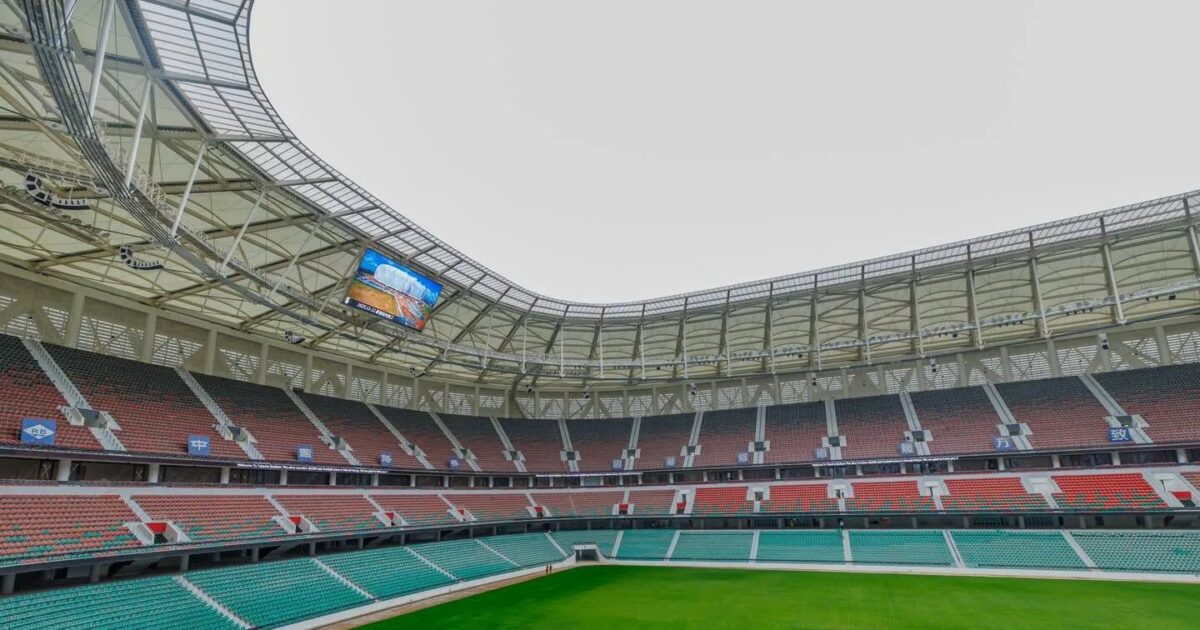
NAIROBI, Kenya Nov 2 – Six Kenyans have moved to the High Court seeking orders to prevent the government from committing public funds or resources towards the planned international football friendly between German side FC Bayern Munich and Dutch club AFC Ajax at the Raila Odinga International Stadium, popularly known as Talanta Stadium. The petitioners, led by Erick Mankuyu, want the court to compel the government to disclose the full financial arrangements for the match, which is scheduled for January 5, 2027, as part of the official opening of the newly constructed stadium in Nairobi. The petition challenges the transparency of the event’s financing, arguing that the government has not adequately disclosed the sponsorship agreements, contractual obligations and possible public financial commitments associated with the high-profile fixture. President William Ruto announced the planned match last week, saying it would be delivered through corporate partnerships and a self-sustaining commercial model. However, the petitioners argue that assurances of private-sector financing are insufficient without full disclosure of the agreements and the extent of any government involvement. The petitioners say the reported costs raise questions about who will ultimately meet the financial obligations and whether taxpayers could be exposed to direct or indirect expenditure. The petition has been filed by Erick Sayialel Mankuyu, Julius Kimani Kamau, Dickson Kimathi Muli, Nicholas Ochieng Oyoo, Mulinge Muteti and Collins Otieno. They have sued the Attorney General, the Cabinet Secretary for Sports, the Cabinet Secretary for the National Treasury and Sports Kenya. The Law Society of Kenya (LSK) and Katiba Institute have been named as interested parties. The petitioners argue that the government has a constitutional obligation to ensure transparency and accountability in the management of public resources, particularly where public institutions, facilities or personnel may be deployed for an event. They contend that without disclosure of the financial arrangements, it is difficult for the public to establish whether the match is genuinely being financed through private commercial partnerships or whether public funds and resources will be required. The petitioners are seeking conservatory orders restraining the respondents from authorising, allocating, releasing, committing or spending public funds towards the match unless compliance with constitutional and public finance requirements is demonstrated. They also want the court to restrict the deployment of public resources, including security personnel, transport and stadium facilities, towards the event pending full disclosure and compliance with the law. In addition, they are seeking orders requiring the preservation of all records relating to the match, including financial documents, procurement records, sponsorship agreements and official correspondence. The petitioners want the respondents compelled to disclose within seven days the complete sponsorship agreements and contracts involving FC Bayern Munich and AFC Ajax, the identities of corporate sponsors and the exact financial contributions or obligations undertaken by each and detailed budgets covering appearance fees, travel, accommodation, security, insurance and other logistical expenses. They are also seeking to know whether public funds, government guarantees, subsidies or public personnel will be committed to the event. They are further seeking an independent audit of all public expenditure and financial commitments connected to the fixture. The petitioners argue that disclosure is necessary to establish the extent of the government’s financial exposure and ensure that any use of public resources complies with the law. The case is anchored on several provisions of the Constitution of Kenya, 2010, including Article 35, which guarantees the right of access to information held by the State. The petitioners also rely on Article 201, which sets out the principles of public finance, including openness, accountability, prudent use of public money and clear fiscal reporting. Articles 206 and 226, which provide safeguards on the withdrawal, management and accountability of public funds, also form part of the legal basis of the petition. The petition further invokes Articles 22 and 23, which provide for the enforcement of fundamental rights and freedoms through the courts. The petitioners have also cited the Public Finance Management Act, 2012, and the Access to Information Act, 2016, in seeking disclosure of the financial and contractual arrangements. They argue that the public has a right to know whether the event will create financial obligations for the State, regardless of whether it is being presented as a privately sponsored undertaking. The petition also raises broader questions about the financing and construction costs of Talanta Stadium, which is being prepared to host major sporting events. It references previous parliamentary scrutiny of the project’s construction costs, which reportedly rose from an initial estimate of KSh35 billion to KSh45.85 billion. The petitioners also point to concerns raised by the Auditor-General regarding contingent liabilities and infrastructure asset-backed security arrangements. They argue that the stadium’s financing history makes transparency around the proposed opening event particularly important, especially where government resources or financial guarantees may be involved. The petitioners further cite competing national priorities, including unemployment, gaps in healthcare, road infrastructure challenges and education funding, as reasons why public expenditure must be subjected to strict accountability. The case places the proposed Bayern Munich-Ajax fixture under scrutiny over the extent of public involvement in an event the government has described as commercially self-sustaining. The High Court is being asked to intervene to safeguard public resources and compel disclosure of the financial arrangements before any public funds or resources are committed to the match.
NAIROBI, Kenya Nov 2 – Six Kenyans have moved to the High Court seeking orders to prevent the government from comm


Commentaires