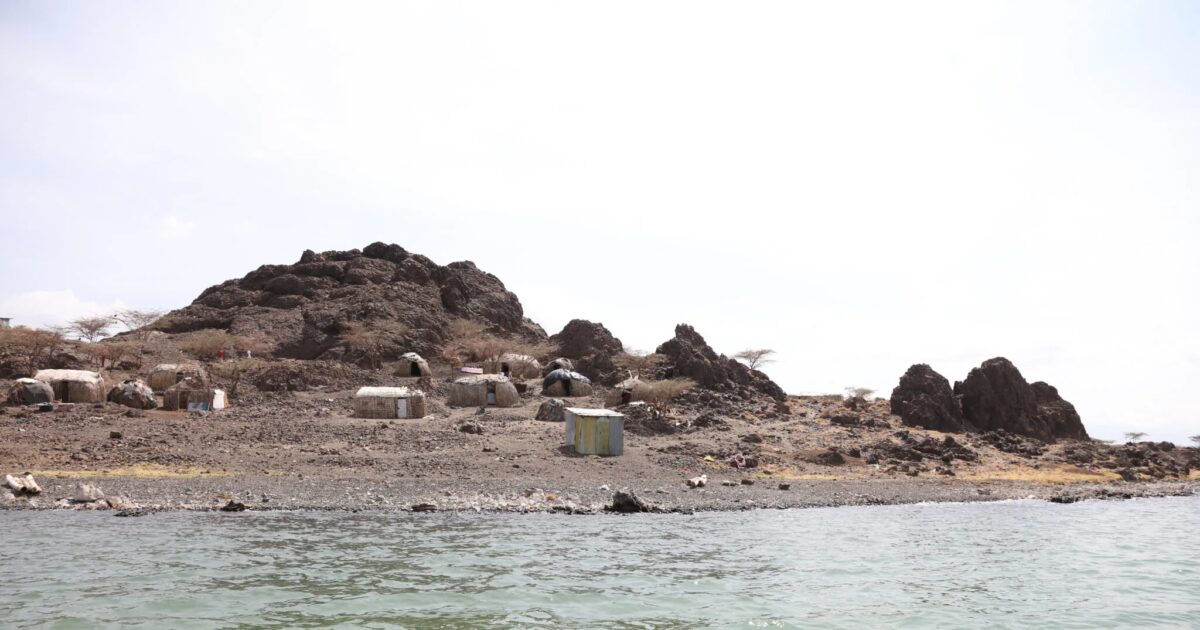
NAIROBI, Kenya, Oct 29 – The journey to Komote Island, on Lake Turkana, brought me face to face with a community whose story is as extraordinary as the landscape it inhabits. Under the Kenya Tourism Board’s Hapa Ni Wapi campaign, our tour of northern Kenya took us beyond the familiar images of arid plains, volcanic hills and vast stretches of water to encounter the El Molo, one of Kenya’s smallest ethnic communities. Known historically as the “crocodile eaters” because of their association with fishing and the lake’s aquatic life, the El Molo have built their identity around Lake Turkana. For generations, the lake has provided food, shaped livelihoods and influenced the customs that define their community. But beneath the attraction of their distinctive heritage lies a more urgent concern: the survival of a language and cultural practices threatened by the pressures of assimilation, a shrinking population and changing ways of life. Standing on the island, I was reminded that northern Kenya’s tourism potential is not limited to its scenery. Its greatest asset may also be the living histories of communities whose traditions risk disappearing before the wider country fully understands them. The challenge is how to preserve that heritage while ensuring the people who carry it can access healthcare, economic opportunities and the benefits of tourism. Preserving a language before it disappears At the Desert Museum in the Marsabit region, our guide, Sarah Wako, explained how efforts to document the El Molo language are helping keep a record of a community whose linguistic heritage has come under pressure. The museum brings together artefacts and accounts of everyday life, from traditional ornaments and clothing to household utensils, food practices, livestock-related customs and the objects used during marriage negotiations. It offers visitors an opportunity to understand how communities lived, communicated and organized themselves before modern influences transformed many of their practices. Wako said researchers, including archaeologists and linguists, recognized the need to document the El Molo language and preserve it for future generations. “That process was started a long time ago by the archaeologist, linguists. They noticed that this memory needs to be kept,” she said. The concern is not simply that a language may cease to be spoken. When a language disappears, it can also take with it expressions, oral histories, traditional knowledge and ways of understanding the environment that may not translate easily into another tongue. Wako explained that oral storytelling, once an important means of passing knowledge between generations, has increasingly involved languages spoken by neighboring communities. “But right now, they put it in the museum, because when they do community outreach, and slowly, they try slowly slowly how to integrate it, so that they don’t completely lose it,” she said. The approach combines documentation with attempts to reintroduce elements of the language through community outreach. However, recording a language in a museum is only part of the work. Its long-term survival depends on whether younger members of the community can learn it, speak it at home and use it in everyday interactions. That makes preservation a continuing community effort rather than a project that can be completed by archiving words and cultural objects. The traditions behind the crocodile-eater identity On Komote Island, Severio Lenapir offered a glimpse into the beliefs and customs that continue to shape El Molo life. His account described traditional practices associated with prayer, healing, rainfall and protection before fishing or hunting expeditions. These were not merely rituals but part of a wider system of beliefs through which the community understood its relationship with nature and the uncertainties of life around the lake. Lenapir recalled how members of the community would seek blessings before going out to fish or hunt crocodiles and other animals. “They have to stay there to be blessed before they go to ant crocodiles, people, and also fish,” he said. His explanation also touched on traditional medicinal practices and the use of particular places for prayer when rainfall was scarce or families faced difficulties. Such traditions offer a window into a society whose relationship with Lake Turkana extends beyond the economic value of its waters. The lake is also woven into its spiritual and cultural identity. Yet these customs must be understood within the context of a changing community. As younger generations encounter new social influences, the question is whether traditional knowledge can be passed on without restricting their access to modern education, healthcare and other opportunities. For Lenapir, the community’s challenges are not confined to cultural preservation. Access to essential services remains a pressing concern. Healthcare challenges on the island The distance between the island and medical services emerged as one of the most immediate difficulties facing residents. Lenapir described the practical obstacles involved in transporting sick people to health facilities, particularly when aquatic weeds make movement across the water difficult. “We have a challenge, a big challenge of will. To transport or to refund, a person to the hospital,” he said, referring to the difficulties of arranging transport for patients. He explained that although the community has access to a dispensary, getting professional medical assistance can remain difficult because of distance and the availability of transport. For a community whose livelihoods depend heavily on the lake, environmental conditions can directly affect access to healthcare. The challenge illustrates an important distinction between promoting a destination and developing it sustainably. Tourism can generate income and create opportunities, but those benefits must sit alongside improvements in the infrastructure and services residents need. Without reliable access to healthcare and transport, the people expected to preserve and share their heritage with visitors continue to face everyday vulnerabilities. Turning cultural heritage into a tourism economy For Wako, the answer lies partly in developing tourism around the cultural assets that distinguish northern Kenya from other destinations. She said the region could attract visitors interested in authentic cultural experiences, including traditional food, homestays, festivals and opportunities to learn directly from local communities. Rather than replacing traditional architecture and customs with standardized tourism facilities, she advocated for accommodation and experiences that retain a strong local identity. “We try not to go the modern way. We try to give you an experience of modern, but a traditional way,” she said. The idea is to make culture an economic asset without turning it into a performance detached from the people who sustain it. Cultural tourism can create opportunities for local guides, artisans, food producers and accommodation providers. It can also give younger community members an economic incentive to learn their languages and maintain traditions that might otherwise be abandoned. However, that outcome is not automatic. Communities need a meaningful role in deciding how their culture is presented, who benefits financially and which practices should remain outside commercial tourism. The El Molo experience raises precisely these questions: how can visitors learn about a community without reducing its identity to a tourist attraction? For Wako, cultural festivals and community-based safaris offer one way of building that connection. She pointed to gatherings that bring together different communities through food and cultural exchange, as well as homestays that allow visitors to experience local life more directly. These experiences could help northern Kenya diversify its tourism offering beyond wildlife and scenery, while spreading some of the economic benefits to communities that have historically remained outside the mainstream tourism circuit.
NAIROBI, Kenya, Oct 29 – The journey to Komote Island, on Lake Turkana, brought me face to face with a community w




Commentaires