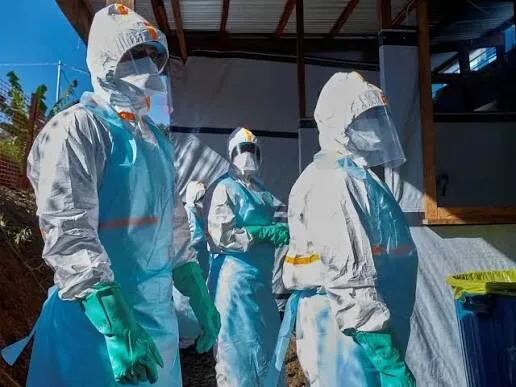
NAIROBI, Kenya Nov 2 – The government is expected to release 46 people who have been under quarantine over the Ebola outbreak on Tuesday,, as it intensifies diplomatic efforts to persuade Saudi Arabia to lift travel restrictions imposed on the country. The planned discharge will follow the completion of the mandatory 21-day monitoring period by the contacts, provided they remain free of symptoms. Health Cabinet Secretary Aden Duale said the government was also optimistic that five of the seven patients still receiving treatment would be discharged alongside the contacts after returning a second negative Ebola test. The five patients had already tested negative once and were scheduled for another test on Monday, November 2, before a final decision on their discharge. The planned releases will add to the 20 contacts who were discharged on October 26 after completing 21 days of monitoring without developing symptoms. This would bring the number of people released from quarantine to 66, marking another milestone in Kenya’s efforts to contain the Bundibugyo Ebola outbreak. The Ministry of Health says all 135 contacts linked to the initial imported case have been identified and traced, with 118 placed under quarantine as part of containment measures. Kenya has reported nine confirmed infections, including two deaths, with all subsequent infections linked to the initial case involving a Kenyan national who had travelled from the Democratic Republic of Congo through Uganda. The eight secondary infections involved four healthcare workers and four close family members of the initial patient. Duale said Kenya had not recorded a new confirmed infection since October 19, adding that there was no evidence of transmission beyond the identified cluster. The government maintains that the outbreak has remained contained through contact tracing, isolation, laboratory testing and enhanced surveillance at points of entry. Meanwhile, Kenya has stepped up diplomatic engagement with Saudi Arabia following the Kingdom’s decision to suspend travel and visa services involving the country over concerns about the Ebola outbreak. Saudi Arabia announced the restrictions on October 30, barring its citizens from travelling to Kenya and suspending the issuance of all categories of visas to Kenyan travellers. The restrictions also prohibit entry into Saudi Arabia for travellers arriving from Kenya, including those transiting through other countries if they have been in Kenya within the preceding 21 days. In response, the Ministry of Foreign and Diaspora Affairs formally protested the decision, describing the restrictions as disproportionate and unsupported by the prevailing epidemiological situation in Kenya. In a diplomatic communication dated October 30, Nairobi urged Riyadh to review and immediately lift the measures, warning that they could disrupt travel, trade, tourism and employment opportunities between the two countries. Kenya also asked Saudi Arabia to provide the World Health Organization (WHO) with scientific justification for the restrictions within 48 hours, in accordance with the International Health Regulations. The government further indicated that it would raise concerns over the restrictions with the Africa Centres for Disease Control and Prevention (Africa CDC). Health authorities have argued that Kenya’s containment efforts should be supported through international cooperation rather than blanket travel restrictions. Health Cabinet Secretary Aden Duale maintained that the measures imposed by Saudi Arabia did not reflect the progress made in containing the outbreak. Kenya is particularly concerned about the potential economic implications of the restrictions, given that Saudi Arabia hosts a significant number of Kenyan migrant workers and remains an important destination for Kenyan travellers. The restrictions could also affect students, business travellers, tourists and religious pilgrims seeking to travel to the Kingdom. Saudi Arabia, however, has said its decision was informed by epidemiological assessments conducted by its public health authorities to prevent the virus from spreading across its borders. The government has not indicated when the restrictions will be lifted. Kenya’s Ministry of Health has continued to urge the public to remain vigilant while reassuring communities that the confirmed infections have remained within one identified transmission cluster. The World Health Organization has supported Kenya’s containment efforts and recommended evidence-based measures, including surveillance, contact tracing and screening at points of entry, rather than travel restrictions. Kenya’s planned November 3 discharges are expected to provide another indication of progress in the country’s response to the outbreak.
NAIROBI, Kenya Nov 2 – The government is expected to release 46 people who have been under quarantine over the Ebo




コメント