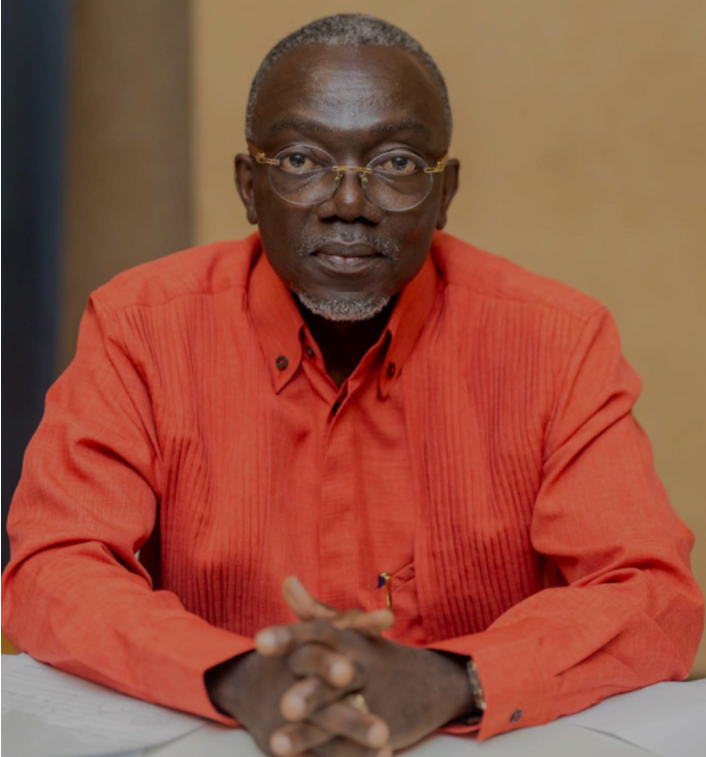
Our grievances against history are real, and the world owes us honesty about them. But a continent that spends its finest energy assigning blame may one morning discover that the past has been thoroughly explained while the future has been left entirely unbuilt. By Ing. Prof. Douglas Boateng, Chartered Director UK | Chartered Engineer UK | Fellow, Institute of Directors UK | Fellow, Ghana Institution of Engineering | Governance, Industrialisation and Supply Chain Strategist | Founder, Boardroom Governance Summit | Founder and Scriber, NyansaKasa (Words of Wisdom) The Continent With An Answer For Everything A remarkable talent has quietly flourished across our continent, and it is the ability to explain almost any problem with breathtaking precision. We know who caused it, which administration inherited it, which one worsened it, which international institution contributed to it and which foreign power ought to apologise for it. We can debate yesterday’s mistakes for hours, form committees to investigate them, and, when those committees report, form fresh committees to discover why the first recommendations were never implemented. Meanwhile the drain remains blocked, the factory stays shut, the graduate is still unemployed, the farmer still cannot reach the market, and an African child is still waiting for a future promised before her parents were born. There is, however, a profound difference between understanding responsibility and becoming comfortably addicted to blame. NyansaKasa (Words of Wisdom) draws the line gently: “blame may explain how we arrived at the crossroads, but only responsibility decides whether we remain standing there.” History Is A Teacher, Not A Permanent Address Let us begin with honesty, because Africa’s grievances are not imaginary. The transatlantic slave trade devastated communities across generations, colonial rule redirected wealth and institutions towards distant capitals, borders drawn with a ruler cut through kinship and commerce alike, and an unequal global financial architecture still narrows the choices of many African economies. Yet honesty must travel in both directions. Ghana became independent in 1957, Nigeria in 1960 and Kenya in 1963, which means many African nations have now governed themselves for well over six decades, while South Africa, whose democracy dates from 1994, carries a more recent and distinctive legacy of exclusion. The uncomfortable question is how much of today’s underperformance flows from inherited structures and how much from decisions, institutions and behaviours firmly within our own control. Asking that question does not absolve anyone abroad; it simply refuses to surrender African agency, for a continent cannot demand sovereignty while outsourcing responsibility for its choices. As NyansaKasa (Words of Wisdom) reminds us, “the past may explain the weight upon our shoulders, but it must not forever choose the direction of our footsteps.” Rich In Resources, Poor In Value Africa holds vast mineral wealth, abundant arable land, extraordinary solar potential and the youngest population on earth, yet these blessings have not automatically become broad prosperity. The International Energy Agency estimates that roughly 600 million Africans still live without electricity. The contradiction is almost poetic in its cruelty. We mine the cobalt that powers the world’s smartphones while our own businesses run on generators, we export raw cocoa and import the chocolate at many times the price, and we educate brilliant young people who too often discover that their best opportunities lie on another continent. Global market structures certainly matter, but so do our energy policies, procurement decisions, industrial strategies and institutional discipline. NyansaKasa (Words of Wisdom) observes that “a nation that exports its opportunities as raw materials should not be surprised when prosperity returns wearing somebody else’s label.” Ghana And The River That Nobody Poisoned Ghana offers a familiar illustration. Successive governments have wrestled with debt, infrastructure gaps, youth unemployment and environmental degradation. The difficulty arises when public debate becomes a tournament to decide which administration deserves the larger share of blame, while the citizen simply wants reliable power, clean water, affordable transport, good schools and the chance to earn a dignified living. Consider illegal mining, which has turned once pristine rivers the colour of strong tea. Government must enforce the law, protect water bodies, prosecute wrongdoing and offer credible livelihoods, but we must also ask who supplies the excavators, who finances the operations, who buys the gold, who provides local protection and who stays silent because a relative is profiting. The answers reveal that responsibility stretches far beyond the government of the day. NyansaKasa (Words of Wisdom) puts it sharply: “when everyone condemns the polluted river but nobody questions what is poisoning it, outrage becomes merely another form of entertainment.” Arguing About The Builder While The Roof Leaks Nigeria shows the vast distance between possessing potential and converting it into productivity, for a nation whose entrepreneurs have built celebrated businesses in finance, technology and entertainment still loses enormous output to unreliable electricity, infrastructure bottlenecks and policy uncertainty. South Africa, meanwhile, carries the deep structural inequalities of apartheid, which rightly demand sustained attention, yet its experience of load shedding, faltering municipal services and the extensive governance failures documented by the Zondo Commission into state capture shows why historical explanation must always travel alongside present accountability. NyansaKasa (Words of Wisdom) captures the point with homely wisdom: “history may explain why the house needs repairs, but it cannot excuse leaving the roof leaking while the caretakers argue about the original builder.” The Shortcuts We Condemn In Public And Seek In Private Picture an ordinary neighbourhood after heavy rain, a scene that mirrors how we often treat taxes, public property and the little envelope that hurries a file along. Residents rightly blame the authorities for inadequate drainage, yet some of those same residents have been emptying refuse into gutters and tolerating buildings on waterways for years, so when the flood arrives everybody demands accountability and almost nobody volunteers a confession. NyansaKasa (Words of Wisdom) is unsparing here: “a society cannot keep demanding honest institutions while privately rewarding the shortcuts that make them dishonest.” Fairness requires a careful distinction, however, because citizens cannot be expected to resist corruption without protection. Afrobarometer’s 2026 survey across 38 countries found that among those who sought the services, 29 percent reported paying a bribe for an identity document and 22 percent for medical care. A mother pressured to pay for her child’s treatment does not carry the same responsibility as the official who exploits her desperation. Accountability Must Begin Where Power Sits Calls for personal responsibility must never become a convenient alibi for failed leadership. A farmer cannot build a national irrigation network, a student cannot single handedly reform an education system, so those who control budgets, legislation and enforcement agencies carry a correspondingly heavier burden. Africans understand this well, and Afrobarometer’s 2026 findings show that 59 percent of respondents across 38 countries prefer accountable government even if it slows decisions, over speedier decisions with less citizen involvement. Every major public programme should therefore carry measurable objectives, transparent budgets, named institutional owners and published results, while audit findings must produce corrective action, procurement irregularities must be investigated consistently, appointments must reward competence, and consequences must apply regardless of political colours. NyansaKasa (Words of Wisdom) offers a useful definition: “accountability is not the punishment of political opponents, but the consistent application of standards, especially when the wrongdoer wears our own party’s shirt.” What Seoul, Singapore And Tallinn Did Not Do South Korea, Singapore and Estonia appear so often in development speeches that they deserve honorary citizenship of every African conference centre, and while their histories and circumstances differ greatly from ours and should never be copied mechanically, their lessons are instructive. In 1960, South Korea and Ghana had broadly comparable incomes per person, and Korea’s divergence came from decades of patient investment in skills, manufacturing and disciplined implementation. Singapore paired world class public administration with relentless execution, and Estonia built digital public services that dismantled bureaucratic barriers. As NyansaKasa (Words of Wisdom) reminds us, “wisdom does not require copying another traveller’s journey; it requires understanding which habits carried them to their destination.” From Explanations To Execution What, then, must change? Governments should publish annual development scorecards showing what was promised, funded, completed and independently verified, while parliaments should pursue audit findings until they are resolved rather than allowing them to retire peacefully in institutional archives. Businesses should measure success through productive investment, decent employment, tax compliance and environmental stewardship. Schools should teach civic responsibility alongside literacy, numeracy and technical skill, communities should organise around practical improvements such as cleaner streets and safer roads, and citizens should judge policies by evidence rather than by the party that proposed them. Continental bodies, for their part, should prize implementation milestones in infrastructure, industrialisation and regional trade above the elegance of their communiqués. Above all, we must change the questions we ask, moving from who caused the problem to who has the authority to fix it, and from demanding integrity of others to examining whether our own conduct strengthens the standards we preach. The Question Each Of Us Must Answer The world will not stop competing because Africa has legitimate grievances, technology will not wait while we finish the argument, and the next generation will not remain young while today’s leaders debate yesterday’s failures. We must therefore hold leaders accountable without surrendering personal responsibility, demand international fairness without abandoning domestic reform, and confront structural injustice without excusing corruption, incompetence or indiscipline. Economic freedom is not merely the absence of external control; it is the presence of productive capacity, credible institutions and opportunity shared widely enough that every citizen has a stake in its success. NyansaKasa (Words of Wisdom) leaves us with a final reflection: “the past deserves truth, the present demands responsibility and the future requires action, for a generation that spends its life assigning blame may bequeath its children the same problems, accompanied only by better explanations.” Africa cannot blame its way to economic freedom; it must build, produce, govern, learn and cooperate its way there. And if we already know so much about what is wrong with us, the most uncomfortable question remains: what am I personally prepared to do differently, beginning tomorrow morning? ABOUT THE AUTHOR Ing. Professor Douglas Boateng is a pioneering international industrial, manufacturing and production systems engineer, governance strategist and Pan-African thought leader whose work continues to influence boardroom thinking, supply chain transformation and industrialisation strategy across the continent and beyond. As Africa’s first appointed Professor Extraordinaire in Supply Chain Management, he has long championed the integration of procurement, value chain development, industrialisation and governance into national and continental development agendas. An International Chartered Director and Chartered Engineer, he has received numerous lifetime achievement awards and authored several authoritative books. He is the scribe of the globally acclaimed NyansaKasa (Words of Wisdom). His work rests on the conviction that Africa’s transformation — and the protection of its children — will come through deliberate action, strong institutions and leaders willing to build for generations they will never meet. © 2026 Ing. Prof. Douglas K. Boateng. All rights reserved.
Our grievances against history are real, and the world owes us honesty about them. But a continent that spends its fines
评论