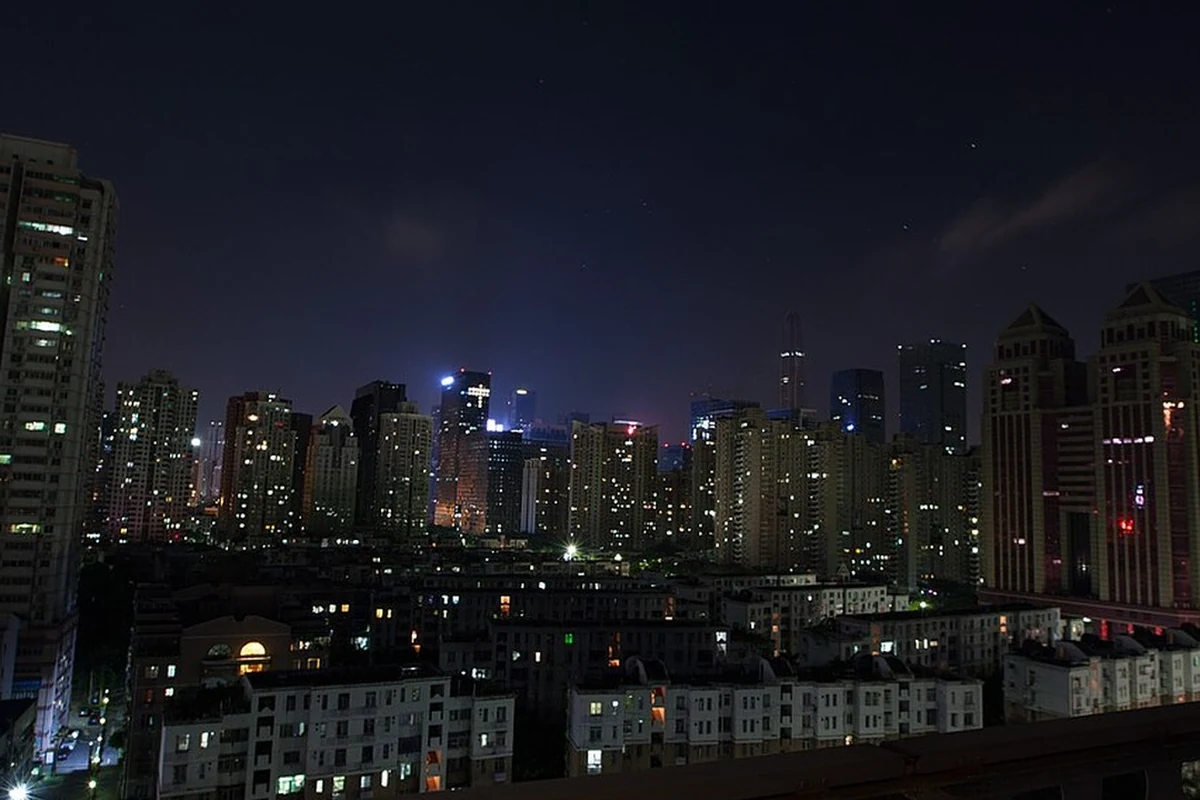
These days the world's eyes are squeezing into a southern city. In November 2026, the 33rd APEC Leaders' Non-formal Meeting is underway in Shenzhen: the CEO Summit on the 18th, the Leaders' Meeting on the 19th — a schedule fuller than the Spring Festival travel rush.
This is China's third time as host — Shanghai in 2001, Beijing in 2014, Shenzhen in 2026, three straight terms in 25 years. Let's take stock: what big moves were announced in the hall, and just how daunting this Asia-Pacific report card is.
First, a string of warm-up numbers: about 3 billion people, US$61.4 trillion in GDP, and roughly US$15.3 trillion each in imports and exports — the economic mass behind this meeting accounts for 60% of the world.
◆ Pengcheng right now: the world's hottest meeting room
On the morning of November 18, the CEO Summit opened at the Qianhai International Convention Center; on the 19th, the 33rd Leaders' Non-formal Meeting took over. Global dignitaries, entrepreneurs and media crowded the shores of the South China Sea, with a theme summed up in one line: building an Asia-Pacific community and sharing a prosperous future.
This is China's third time hosting in APEC's 37 years, after Shanghai in 2001 and Beijing in 2014 — one country running the Leaders' Meeting three times in 25 years is a first in the entire Asia-Pacific mechanism.
Choosing Qianhai as the venue was no accident: this stretch of reclaimed tidal flats is now the Shenzhen-Hong Kong Modern Service Industry Cooperation Zone, with tens of thousands of registered companies — bringing the global business community to meet in China's most economically active testing ground was itself an item on the agenda.
How hot was the atmosphere? Even hotel room rates and seats in the tech park cafés were making way for this meeting.
◆ Three home games, three report cards
Shanghai 2001, the tang-suit group photo, keywords: the eve of WTO entry and e-APEC. Beijing 2014, the Yanqi Lake blueprint, keywords: connectivity and the FTAAP roadmap. Shenzhen 2026, the bay-area report card, keywords: innovation and the Asia-Pacific community.
The three home games line up with three steps in China's economy: a debut on the eve of WTO entry, a banquet as the world's second-largest economy, and today's host of the digital and bay-area economy — the weight of the host is the weight of the nation.
Shenzhen's own résumé is equally hard-core: a border town of just over 30,000 people four decades ago, it now has nearly 18 million permanent residents and a regional GDP topping 3.6 trillion yuan. From small fishing village to city of innovation, it's a concentrated sample of the Asia-Pacific miracle.
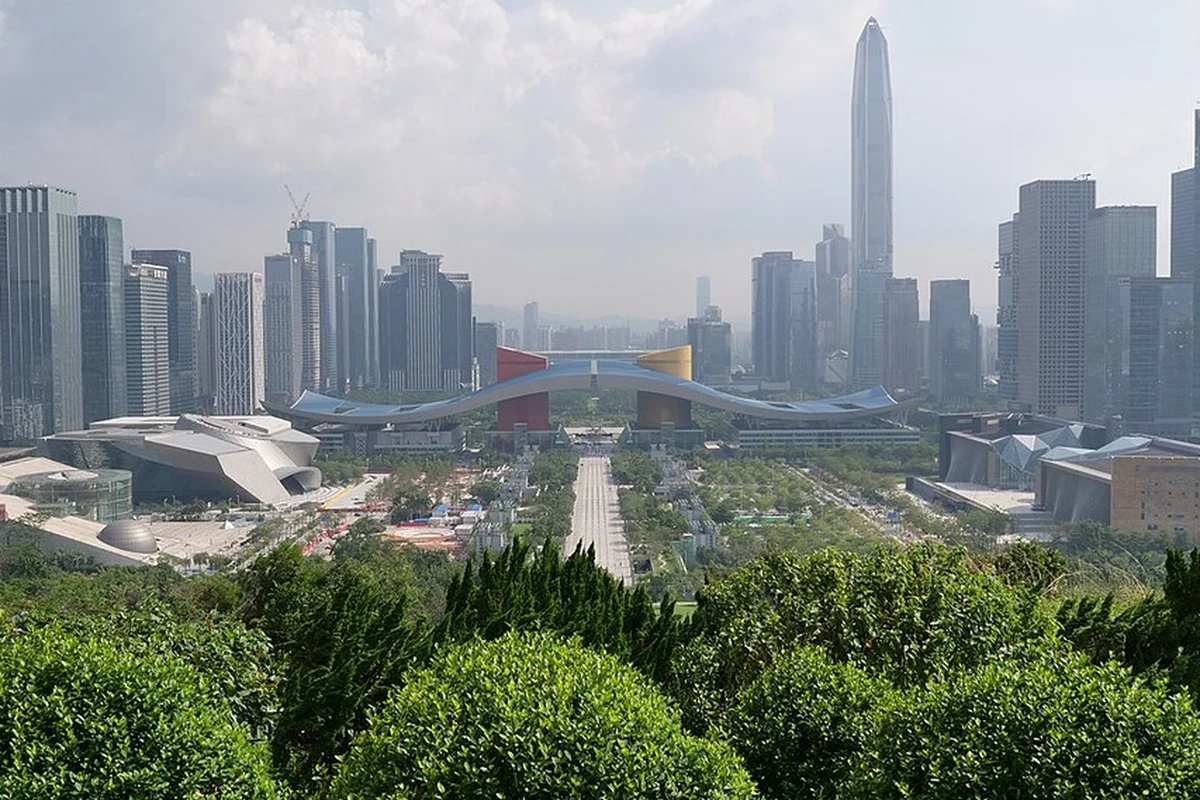
Choosing this city as host was persuasive all by itself.
◆ Three moves with real money behind them
At the Leaders' Meeting on November 19, the Chinese side announced on the spot: US$20 million to fund practical APEC cooperation; the establishment of an Asia-Pacific Community Research Center in Shenzhen; and cooperation bodies in fields including digital technology, cross-border data flows, clean energy and small and medium enterprise development.
Break down the weight of each: the US$20 million is operating funds for a loose mechanism, the research center gives 37 years of experience intellectual backing, and the cooperation bodies in four fields turn declarations into schedules — money, think tank and levers, nothing missing.
Especially the move to put the research center in Shenzhen: after 37 years of Asia-Pacific cooperation, with practices, communiqués and roadmaps scattered across meeting documents, this is the first time a dedicated body will do systematic research and talent training — the equivalent of building this mechanism an archive plus a laboratory.
A mechanism loose for 37 years finally got a real gift package this time, and plenty of media used 'gift package' right in their headlines.
◆ The bay-area alliance: stringing the world's engines onto one line
Another low-key but subtle move was support for setting up a World Bay Area Economic Cooperation Alliance. New York, San Francisco, Tokyo, the Guangdong-Hong Kong-Macao Greater Bay Area — for the first time, the world's top bay areas had a horizontal alliance, linking the showrooms of open economies into a network.
The numbers look good: the Guangdong-Hong Kong-Macao bay area has over 80 million permanent residents and an economic output approaching that of the New York bay area; Shenzhen alone regularly posts import-export totals that rival the national accounts of many small and medium economies — networking the bay areas means stringing half the world's innovation engines onto one line.
The essence of bay-area economy is openness, coordination and spillover: capital crosses bridges, talent commutes, technology scales walls. Once the alliance gets running, the redundancy and resilience of Asia-Pacific supply chains will step up a level.
The Shenzhen Bay Sports Center is shaped like a spring cocoon, and everyone has had lively fun interpreting the 'breaking out of the cocoon' meaning.
◆ The report card: a behemoth holding 60% of the world
Check a few of the latest figures on the APEC website: about 3 billion people, or 36.4% of the world; GDP of US$61.4 trillion, or 61.6% of the global total; merchandise exports and imports of about US$15.3 trillion each, accounting for 46.7% and 46.1% of the world respectively — nearly half of global goods trade runs across this table.
The growth curve is turning up too: on November 15, 2026, the APEC Policy Support Unit raised the regional growth forecast to 3.4% — in a year when protectionism is everywhere and major global institutions keep cutting their forecasts, this report card can more than hold its own.
A few more angles: the Asia-Pacific's near-half share of global trade means the chip in your phone, the clothes on your back and the cherries on your table most likely passed through an APEC member's port; average import tariffs among members have dropped sharply since the mechanism's early days.
The Asia-Pacific miracle isn't an adjective — it's an audited balance sheet.
◆ A thousand-mile flight: this city can handle it
The coastline at Dameisha is probably about to be photographed bald these days. Between sessions, dignitaries and entrepreneurs talk AI, cross-border data and green energy — one harder topic after another; on the CEO Summit's breakout session list, digital, green and small-business themes almost sweep the floor.
The Chinese side said in its speech: may Asia-Pacific cooperation spread its wings like the great roc and fly a thousand miles. Shenzhen is also called Pengcheng, the City of the Roc — those four characters fit this city like a glove.
For businesses and ordinary people, the most concrete expectations from this meeting come in three: smoother cross-border e-commerce rules, clear guidelines for data flows, and more cooperation channels for small businesses — the grand community narrative ultimately lands on customs declarations and logistics forms.
The closing of the meeting is only a comma — with the research center and cooperation bodies landing in Shenzhen, the second half of the story is just beginning.
US$20 million, one research center, a batch of cooperation bodies, one bay-area alliance — this Shenzhen meeting tightened a notch on the loose mechanism.
The card table for 60% of global GDP has moved into Pengcheng, and half the report card is already in.
The other half depends on how the next three years write it.
This article draws on public reports from the APEC official website and Xinhua.

Comments